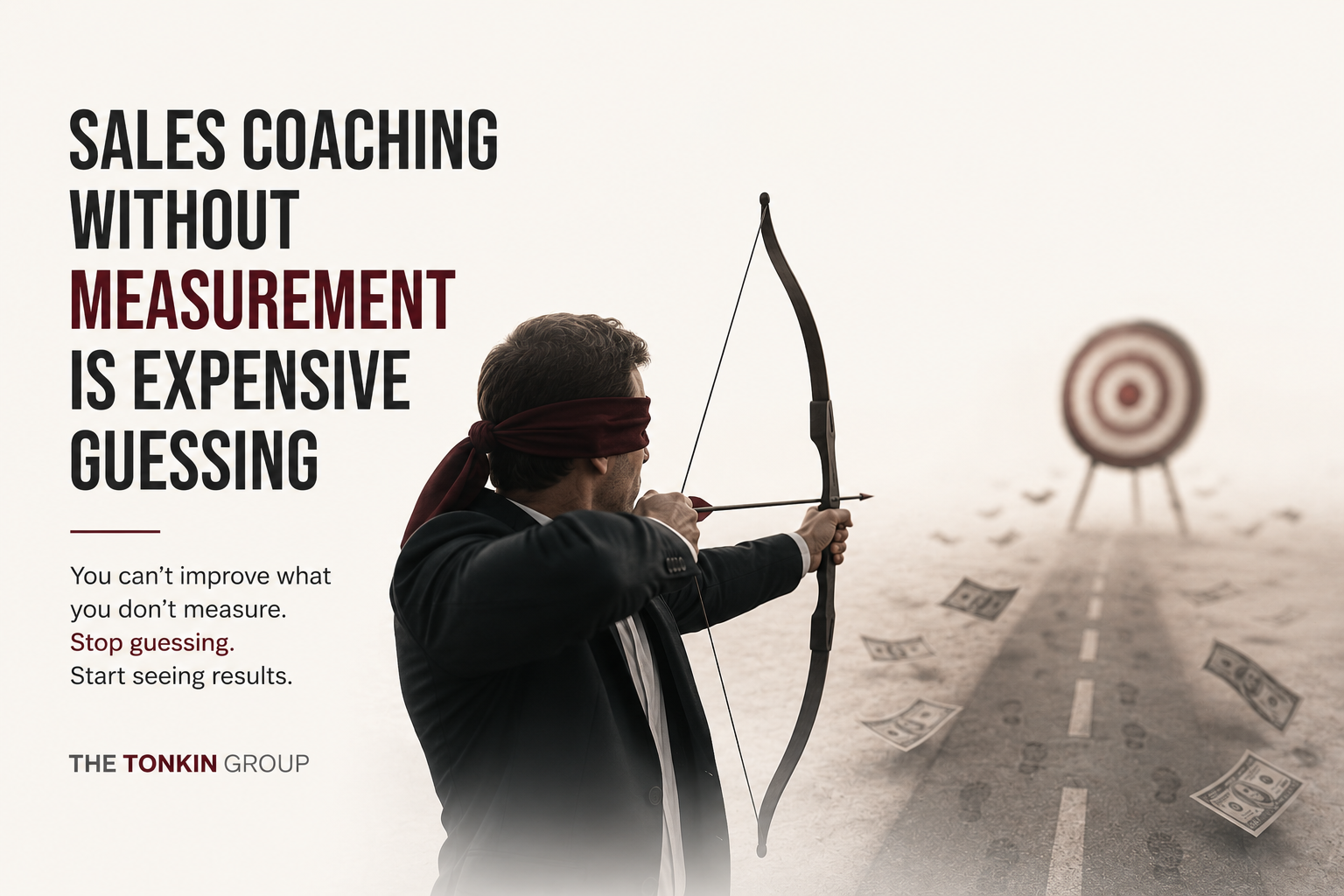
Ask most sales coaches how they know a session worked, and the answer is a feeling: the rep seemed more confident, the energy in the room was better. That is not evidence. It is an opinion with an invoice attached, and professional services firms pay for it every month without ever finding out whether it changed a single outcome.
Why Confidence Is the Wrong Metric
Confidence is easy to observe and easy to fake, including by the rep to the coach. It is also disconnected from competence. A rep can walk out of a coaching session feeling great and still freeze in the exact moment the coaching was supposed to fix, because nothing about the session measured whether the underlying behavior actually changed.
What Rigorous Measurement Looks Like
My doctoral research at Regent University studied authenticity and sincerity in leaders under real scrutiny, not self-report. The same discipline applies to sales coaching: measure the actual behavior under real conditions, not the rep's or the coach's impression of the session. That is the difference between a coaching program and a coaching ritual.
The Diagnostic That Replaces the Guess
Progression of Performance® replaces the feeling-based check-in with a specific question: which stage did the rep's training actually exit early — Learn, Practice, Rehearse, or Perform? That question has a measurable answer. Whether the session felt good does not.
What to Change This Quarter
If your coaching program cannot point to a specific behavior that changed and a specific way you know it changed, you are paying for a feeling. Book a Revenue Systems Snapshot and replace it with a measurement.
.png?width=1400&height=600&name=TheTonkin-Group-Logo%20(1).png)

.png?width=1672&height=941&name=ChatGPT%20Image%20Aug%2021%2c%202026%2c%2007_13_41%20PM%20(1).png)